Why a Retirement Timeline Is Important
Planning for retirement isn't something that happens overnight. It's a journey that requires careful preparation over many years.
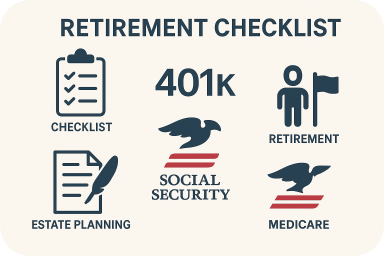
Estimate retirement needs
Calculate how much you'll need to maintain your desired lifestyle in retirement.
Assess current financial situation
Take stock of all assets, liabilities, and current savings rate.
Maximize retirement contributions
Increase contributions to 401(k)s, IRAs, and other retirement accounts.
Pay down high-interest debt
Focus on eliminating credit card debt and other high-interest loans.
Review insurance coverage
Ensure adequate life, disability, and health insurance protection.
Create/update estate plan
Establish or review wills, trusts, and advance directives.
Research Social Security benefits
Understand how your benefits are calculated and claiming strategies.
Refine retirement budget
Create a more detailed budget of anticipated retirement expenses.
Evaluate asset allocation
Review and adjust investment portfolio as retirement approaches.
Consider catch-up contributions
Take advantage of catch-up contribution limits if 50 or older.
Research healthcare options
Understand Medicare and potential gaps in coverage.
Assess housing situation
Consider whether to downsize, relocate, or age in place.
Review beneficiary designations
Ensure beneficiaries are up to date on all financial accounts.
Start considering retirement date
Begin to identify your target retirement timeframe.
Create retirement income plan
Develop a strategy for generating income in retirement.
Consider working with a financial advisor
Seek professional guidance for retirement planning.
Research tax implications
Understand how retirement withdrawals will be taxed.
Practice living on retirement budget
Test your projected retirement budget while still working.
Explore part-time work options
Consider whether you want to work part-time in retirement.
Update estate plan
Review and adjust wills, trusts, and advance directives.
Plan for RMDs
Understand Required Minimum Distributions and their impact.
Finalize retirement date
Set a specific target date for retirement.
Contact Social Security
Determine when and how to claim benefits.
Review Medicare enrollment deadlines
Ensure you don't miss important enrollment periods.
Evaluate employer benefits
Understand what benefits will continue after retirement.
Consolidate accounts
Consider combining accounts for easier management.
Plan for debt management
Create a strategy for managing any remaining debt.
Create plan for social engagement
Consider activities and social connections for retirement.
Notify employer
Provide formal notice of your retirement date.
Apply for Social Security (if applicable)
Submit application 3 months before you want benefits to begin.
Enroll in Medicare (if 65+)
Sign up during your Initial Enrollment Period.
Choose Medicare supplemental coverage
Select Medigap, Medicare Advantage, and/or Part D plans.
Finalize budget
Make final adjustments to your retirement budget.
Set up withdrawal strategy
Establish how you'll draw income from your assets.
Organize important documents
Gather and organize financial and legal documents.
Retirement Planning Resources
For additional information, visit the official USA.gov website or the US Department of Labor for a retirement toolkit.